
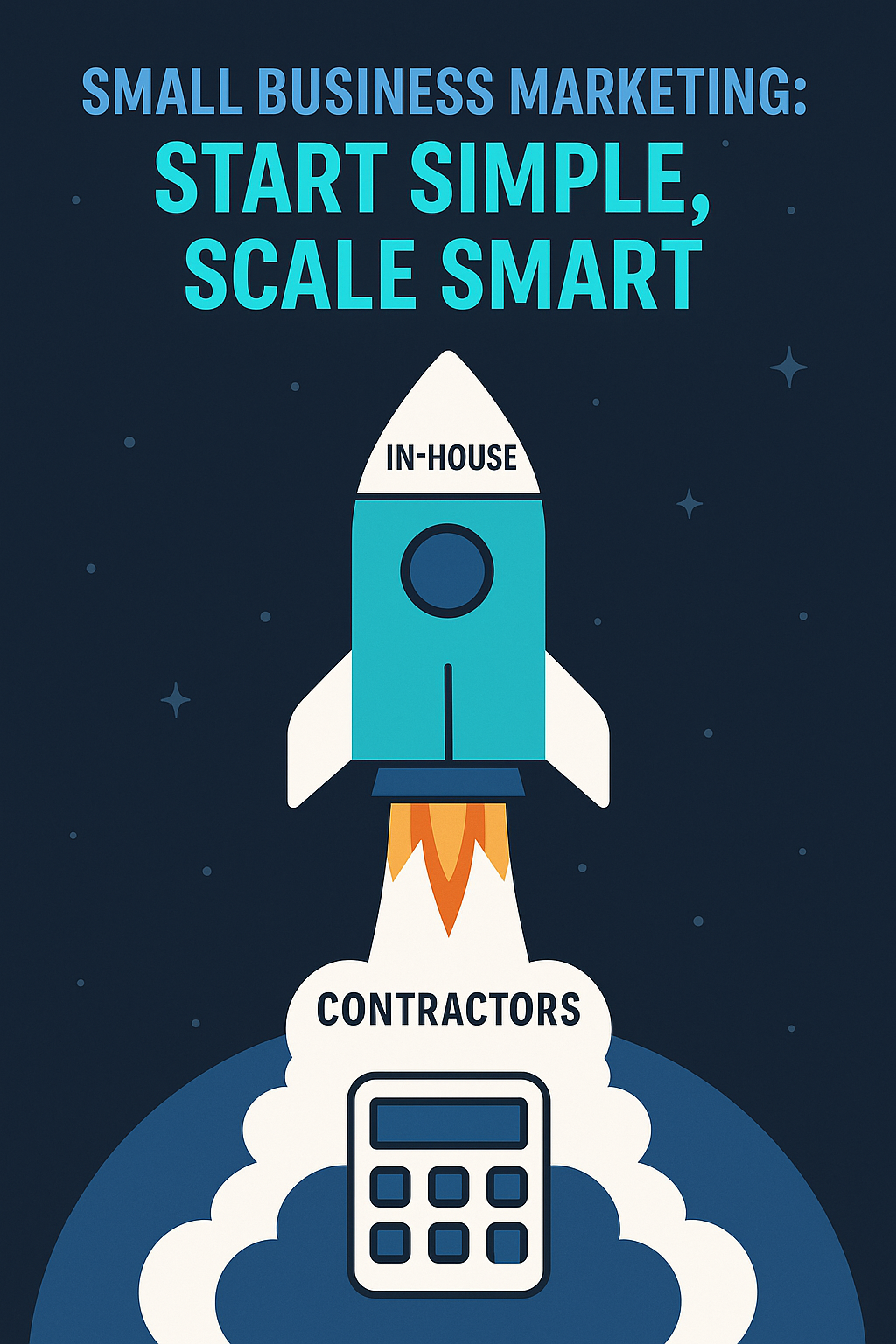
Marketing doesn’t have to be overwhelming. If you’re a small business owner, you don’t need to wait until you can hire a full-time marketing person to start building momentum. The best approach is to begin with what you can manage yourself, then add specialists as your business grows.
You’ll be surprised how much guidance is available today — from launching your first Google Ads campaign, to setting up a website and email list, to publishing content that builds trust.
Take the time to start. Get something working. Then take the time to decide how to scale what’s working. This way, you create a proven system that grows with you — instead of paying for guesswork and promises.
After 20+ years, I find myself giving the same advice over and over: businesses should take those first steps themselves. Establish something that works before you outsource and scale. It’s always the better path. Start lean, use contractors to fill gaps, and grow into a proven system before you worry about adding full-time headcount.
Step 1: Start with DIY (Until You Can’t)
When you’re just getting started, self-managed marketing is perfectly fine.
- Build your website.
- Claim your Google Business Profile.
- Post occasionally on social media.
- Start collecting emails.
That’s enough to begin building traction. You don’t need a “Head of Marketing” to get off the ground — you just need a consistent, simple foundation.
Step 2: Fill Weak Spots with Specialists
Eventually, you’ll hit a wall — whether it’s time, skills, or both. That’s your cue to bring in outside help, but not a full-time generalist.
Think of marketing as five pillars:
- SEO – Get found
- PPC/Ads – Capture demand
- CRO – Turn traffic into sales
- Content – Build trust
- Email/CRM – Nurture customers
Wherever you’re weakest, that’s where a contractor or agency can plug in.
- Need ad campaigns that actually convert? → Bring in a PPC pro.
- Struggling with content? → Hire a writer who knows your industry.
- Not seeing sales from traffic? → Get a CRO consultant.
This way, you get senior-level skills without paying senior-level salaries.
Step 3: Scale with Proof, Not Hope
Here’s the key: when you eventually do hire someone in-house, you’ll already have a proven starting point. That means your new hire isn’t wasting months experimenting from scratch — they’re stepping into working campaigns, processes, and reporting they can build on.
Hiring too early flips that equation: you put a generalist in a chair, hand them an undefined strategy, and hope they “figure it out.” That’s an expensive gamble.
Even more important: when you’ve already created something that works, you’ll understand the recommendations and changes that truly improve results. You’ll know what to measure, what to expect, and when you’re actually getting value.
Bottom Line
Start simple. Do what you can yourself. Then use contractors to fill in the gaps and scale with confidence. By the time you hire full-time, you’ll have a system that works — not just a payroll expense.


